
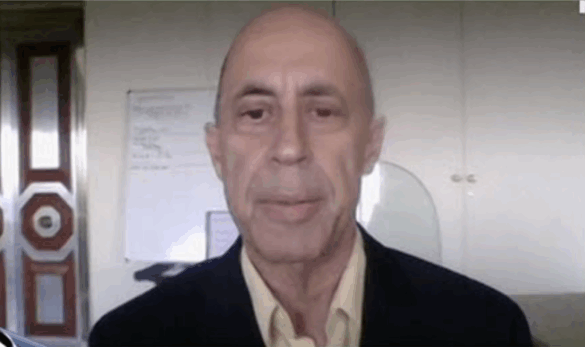
Retired U.S. Army Colonel and international law expert Manuel Supervielle explained that transnational criminal organizations, such as the Tren de Aragua, do not enjoy the protections that the United Nations Charter grants to states. Instead, they may be regarded as threats that can be confronted under the principle of self-defense, provided there is evidence of their aggression.
Supervielle recalled that modern international law recognizes only states as subjects of protection and jurisdiction. Based on this premise, the colonel was clear: terrorist or transnational criminal organizations are not states and therefore are not covered by that protection. “Of course, they are protected by human rights because they are human beings. But if they engage in acts of attack, there is legal authority to defend against them,” he explained.
Supervielle compared this framework to Russia's invasion of Ukraine. “When Putin attacked Ukraine, he violated the UN Charter because both are states,” he said. However, in the case of a criminal group, the dynamics are different: “If there is sufficient evidence that the Tren de Aragua is carrying out these actions, then it qualifies as an organization that may be targeted wherever and whenever it is found.”
The colonel added that the principle of self-defense set out in the UN Charter provides a legal basis for such operations, provided there is evidence of the harm caused. “There are many ways the U.S. government could have reached this conclusion. If they determined that the Tren de Aragua meets the criteria, then there is a legal basis to act,” he stated.